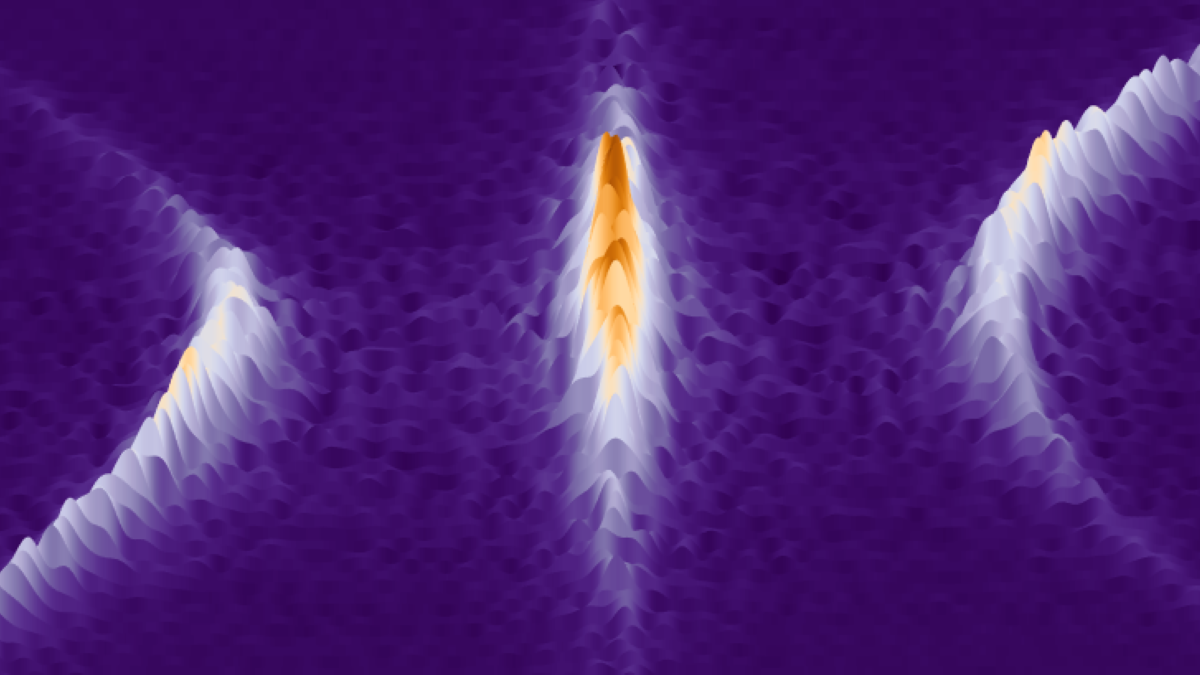
We have been quiet for a little while, but it’s for good reason. Behind the scenes, we have been working intensely on a breakthrough in quantum‑photonic simulation.
Classical simulation tools can model how light propagates through nanostructured materials with extraordinary precision. But they fall short when it comes to capturing the true quantum nature of light – its fluctuations, correlations and interactions. This gap has long limited the ability of researchers and industry to analyse quantum‑optical systems using established modelling workflows.
The central question our team set out to answer was:
How can we translate quantum light effects into a form that classical electrodynamics can compute and measure?
After extensive theoretical work and experimental validation, we found a way to extend classical light simulation methods so they correctly reproduce key properties of quantum light. The insight is both subtle and powerful: deliberately engineered noise.
In our approach, noise is not a nuisance; it is the carrier of quantum information. By imprinting carefully selected noise components onto simulated light sources, we embed the quantum characteristics directly into the classical simulation. The resulting signals can then be analysed using standard tools, with the quantum information encoded within the noise itself.
This method is the result of a deep collaboration between our CSO, Dr Gaby Slavcheva and Prof. Ulrich Hohenester at the University of Graz, Austria. Rigorous theoretical testing was carried out by our joint PhD student, Felix Hitzelhammer, and the work benefitted greatly from the expertise of our long‑standing collaborators, Prof. Christian Jirauschek and Prof. Kai Müller at TUM, Germany. Crucially, experimental data from Kai’s group – especially Katarina Boos and Lukas Hanschke – provided the validation that confirmed the theory.
The paper was published in Nature Communications earlier this year and has already attracted significant attention, with over 4,000 views since its preliminary release on 19 May. The editorial team has now approved the final proofs and we are delighted to share the official version:
🔗 Bridging quantum noise and classical electrodynamics with stochastic methods
“This work represents a significant step towards the digital engineering of quantum-photonic systems and supports our long-term vision of developing advanced simulation tools for quantum technologies”, said Gaby.
We are deeply grateful to everyone involved – including Dr Johannes Stowasser, Tobias C. Sutter, and Prof. Michael Haider, whose thoughtful suggestions strengthened the work. Collaborating with such brilliant researchers (and wonderful people) is a privilege.
This is only the beginning. We are now advancing the next phase: transforming this method into a robust, reliable algorithm ready for commercial deployment.